Practical Tips for Pastry Chefs
More Calm and Precision in Pastry Making
As a pastry chef, you often have to create the sweet highlights of a menu under time pressure. Still, an eye for detail is essential. The right practical tips will help you work in a more organized way, save time, and deliver consistent quality. In this blog post, we’ll show you the most important techniques for your daily work in the kitchen.
At a Glance
- Good preparation (mise en place) is the key to working calmly during peak hours.
- When tempering chocolate, a difference of one or two degrees can determine whether it has a glossy finish or cracks.
- Precise weighing ensures consistent results with every batch.
- Presentation is everything: Fewer components signal high-quality indulgence.
- Clear communication with the kitchen and service staff keeps the flow at the pass smooth.
The Most Important Practical Tips for Everyday Life in a Pastry Shop
#1 Staying Organized with Mise en Place
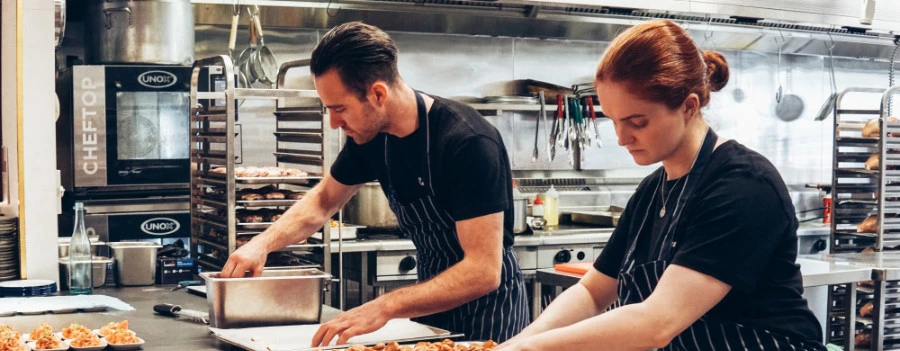
Good preparation is key to the entire service. Weigh the ingredients in advance, portion out the components, and have your tools within easy reach.
- Prepare and label ingredients according to the recipe
- Prepare creams, cake layers, and decorations in advance
- Set up your workspace so it’s clean and organized
This leaves more time for plating during peak hours.
The key to a successful mise en place: flawless kitchen organization. The head chef is generally responsible for this.
#2 How to Temper Chocolate Properly
Tempered chocolate has a glossy sheen, breaks with a crisp snap, and melts evenly. Controlled temperature management is crucial: melt, cool, and then gently reheat. Always use clean, dry tools, as even a few drops of water can ruin the result.
Chocolate Types and Their Processing Temperatures (Guideline*)
- Dark couverture: approx. 31–32 °C
- Milk chocolate couverture: approx. 30–31 °C
- White couverture: approx. 28–29 °C
*Guidelines for processing. Always follow the temperature curve provided by the respective manufacturer.
#3 Weighing Accurately and Documenting Recipes
In pastry making, precision is key. Even small variations in sugar, fat, or binding agents can noticeably alter the texture and flavor. Use a precision scale and write down successful recipes, including measurements and procedures. That way, you can reproduce every batch consistently.
Tip: Whether you’re in the kitchen, front of house, at the front desk, or in housekeeping, exchanging ideas with your colleagues is invaluable. Share tips and successful recipes with each other and work together to refine your dishes.
#4 How to Arrange Plate Desserts Thoughtfully
You eat with your eyes first. Plan ahead how the components, colors, and textures will work together.
- A few simple elements often look more sophisticated than overloaded plates
- Prepare hot and cold components separately and combine them just before serving
- Add sauces and garnishes just before serving
#5 Coordinate with the team and the service department
The pastry chef is part of the kitchen team and works closely with the front-of-house staff and kitchen management. Clear communication about orders, timing, and special requests keeps things running smoothly at the pass. By the way, you can find tips on how to achieve flawless organization in a separate blog post on our site.

Ready to take your next step in pastry making?
Would you like to put your skills to work in a new kitchen? On HOGAST Job, you’ll find numerous job openings in the hospitality and restaurant industry in Austria and Bavaria. You can apply quickly and easily using your profile, and the job alert will automatically notify you of suitable opportunities.
FAQ: Practical Tips for Pastry Chefs
Pastry making is a distinct area of kitchen work. In restaurants, hotels, and commercial kitchens, pastry chefs prepare desserts, sweet treats, and fine baked goods. This includes plated desserts, cakes, creams, mousses, and working with chocolate.
Accuracy, creativity, resilience, and the ability to work well with others are particularly important. A passion for the craft and a willingness to learn will also help you grow in your career.
In Austria, “patissier” is not a separate apprenticeship program but rather a specialization. The traditional path involves a three-year apprenticeship as a pastry chef, which has offered a specialized track in patisserie since 2021. Alternatively, many start with a culinary apprenticeship and later focus specifically on desserts. In addition, there are special patisserie courses and continuing education programs that allow you to advance from commis to chef patissier.