Hygiene in Commercial Kitchens
Why Kitchen Hygiene Matters in Everyday Restaurant Operations
Hygiene in a commercial kitchen isn’t just a nice-to-have—it’s a legal requirement and, moreover, the foundation for preparing high-quality dishes. It protects guests from illness, your business from fines, and you from avoidable stress.
In this post, you'll learn ...
- What Kitchen Hygiene Is Based On
- Who Is Responsible in the Workplace
- What rules apply in everyday operations
What does hygiene mean in a commercial kitchen?
Kitchen hygiene encompasses all measures designed to protect food from contamination. The legal basis for this is EU Regulation (EC) No. 852/2004, which requires every food establishment to implement a hygiene plan based on the HACCP principle. That may sound complex at first, but it’s actually quite simple to implement. HACCP—Hazard Analysis and Critical Control Point—identifies risks before they become a problem.
The practice is based on three areas
- Personal Hygiene: Handwashing, clean work clothes
- Food hygiene: Cold chain , storage, checking freshness
- Facility hygiene: Cleaning, disinfection, pest control
Who is responsible for kitchen hygiene?
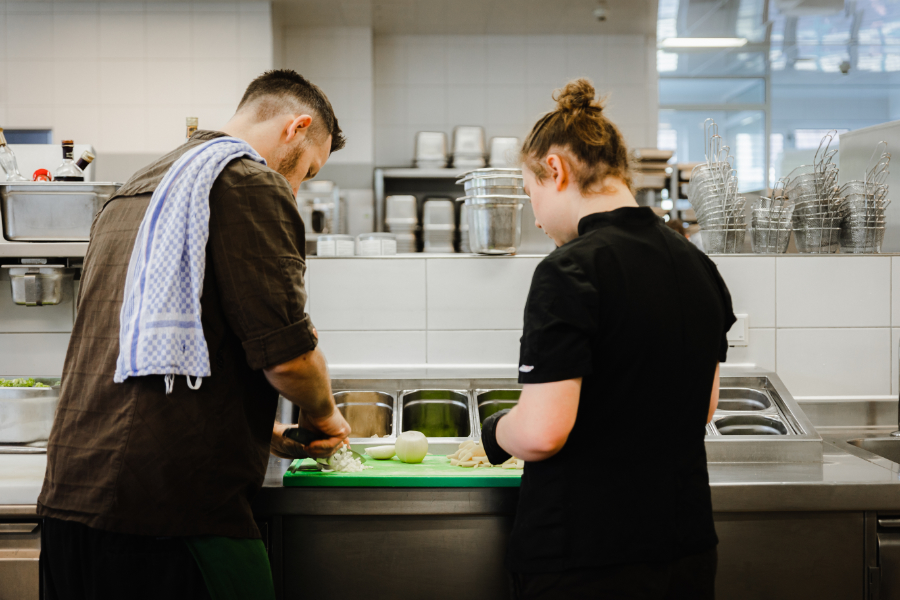
The business is legally responsible: It must develop and document the hygiene plan, ensure its implementation, and provide the necessary documentation during inspections. In day-to-day operations, however, every member of the team shares this responsibility. Whether a kitchen assistant or a chef, anyone who handles food or comes into contact with work surfaces plays a role in ensuring food safety. Regular training ensures that everyone is familiar with the standards and puts them into practice.
Everyday Kitchen Hygiene: The Most Important Rules
Good hygiene stems from consistent routines and effective organization in the kitchen. What specific points should you keep in mind? Below is an overview of the most important ones:
#1 Take Personal Hygiene Seriously
Wash your hands thoroughly and regularly, especially after switching tasks. Wear clean work clothes and tie back long hair. Important: Do you feel sick? Then you belong in bed, not in the kitchen.
#2 Maintain the cold chain
Refrigerated and frozen foods must never get too warm. Store food at the recommended temperature and check it regularly. Frozen foods are usually stored at about minus 18 degrees.
#3 Avoid Cross-Contamination
Always keep raw meat, fish, and vegetables separate. Color-coded cutting boards and separate work areas prevent germs from spreading from one food item to another.
#4 Cleaning and Disinfecting
Clean work surfaces, equipment, and utensils after each use. Follow the facility’s cleaning schedule. Specific hygiene and cleaning tips for professional kitchens will help you do this.
#5 Check Goods Receipt and Storage
Check delivered goods for freshness, temperature, and shelf life, and ensure they are stored quickly and properly.
Hygiene Is a Team Effort in the Kitchen
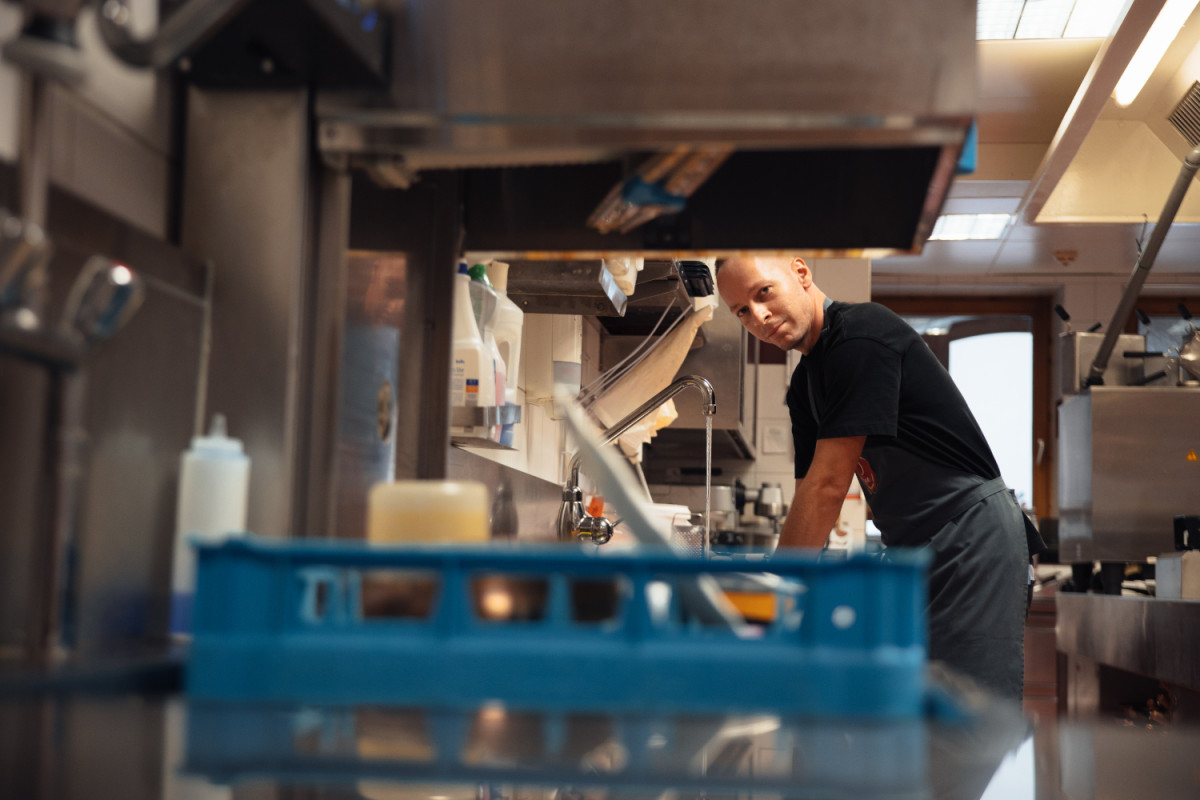
Clean procedures protect guests, ensure the quality of your work, and make day-to-day kitchen operations run more smoothly. Good hygiene depends on the team and on collaboration between the kitchen and the dining room. Are you looking for a job in the kitchen where high standards are upheld? On HOGAST Job, you’ll find the right positions and receive job alerts about new job postings.
FAQ on Hygiene in Commercial Kitchens
Kitchen hygiene encompasses all measures taken to protect food from contamination. These include personal hygiene, safe food handling, and the cleanliness of the kitchen and equipment.
HACCP is a legally required self-monitoring system. It helps businesses identify food safety hazards early on and implement targeted controls at critical control points.
The company is legally responsible. In day-to-day operations, every team member who handles food shares this responsibility.
Keep raw and ready-to-eat foods separate, use color-coded cutting boards, and clean surfaces after each step.